
Global Views Monthly Interview | Why Give Silver Bullets When You Can Run Alongside Companies with AI?
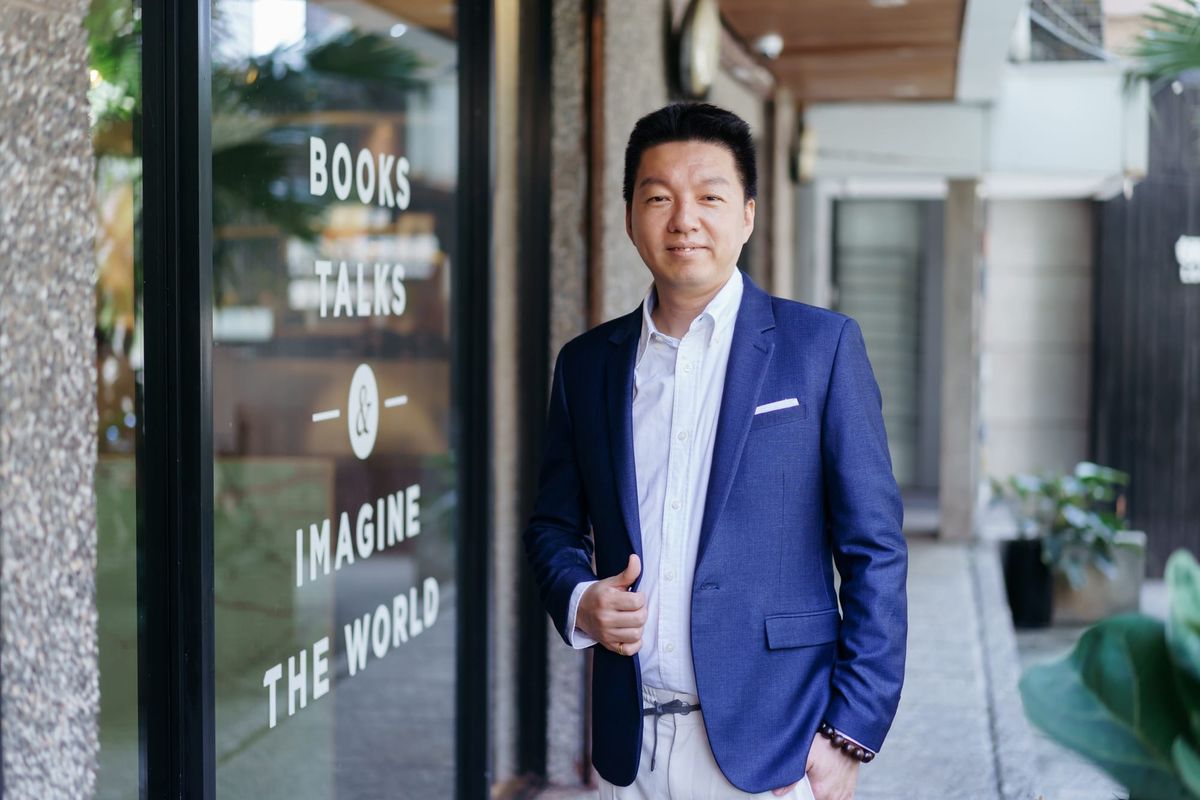
A complete look at how PSF founder Chun-yu Yang helps small and mid-sized businesses complete their AI transformation through AI compute, an AI battle system and enterprise AI agents (Xiao Peng, Xiao Si and Xiao Fu), and proposes a new business model of “AI running alongside you.”
A strategy without direction only speeds a company toward the wrong cliff! A full 97% of Taiwan’s companies are small and mid-sized enterprises. They built their empires on the owner’s single-point strengths, but at the crossroads of digital transformation and generational succession they have fallen into a structural drain of “having technology but lacking mindset, having capital but lacking strategy.” PSF has seen through the crux of the capital market: in this era, what companies lack is often not effort but a “system.” That is why Taiwan urgently needs to rebuild its next-generation growth system and empower industrial transformation and upgrading!
Look at the report card of Taiwan’s SMEs and many operators are industry pioneers who once commanded the field. Yet PSF founder Chun-yu Yang (YouTube channel: CEO Yang) sees a very different reality behind countless financial statements. A serial entrepreneur, venture-capital operator and listed-company director, he has long moved along the front lines of the capital market, and has observed that when companies face second-generation succession or technological disruption, most get stuck not because they aren’t trying hard enough, but because they are bogged down in resources that have not been integrated.
To break the deadlock, he decided to step down from being an “investor” to become a “system builder.” This is exactly the core philosophy behind the three characters of “PSF”: “Peng” means making friends first, setting aside the short-sightedness of traditional venture capital that gathers only where there is profit, and putting trust first; “Si” means pooling collective wisdom to help companies clarify blind spots and sort out strategy; and only when the foundation is firm will we finally walk together toward “Fu” — prosperity in business and in succession.
Hitting Companies’ Three Biggest Pain Points and Building an AI Compute Moat
What equipment do companies lack today? Yang puts it bluntly: what operators lack has never been silver bullets, but the “three shortages” — a clear blueprint for change, a technical team that can execute, and the skill to marshal cross-domain resources.
To prescribe precisely, the innovation platform PSF has built takes no shortcut of accepting everyone. It carefully selects sectors with international potential, targeting companies in environmental and green energy, healthcare, artificial intelligence and food technology, determined to push local hidden champions onto the world stage. But building a game for a company cannot be achieved with just a few business plans or a few advisory interviews.
Two years ago, when the market was only beginning to learn about generative AI, PSF had already invested to complete an enterprise-grade physical AI computing center at Yunlin Dacheng Commercial and Industrial Vocational School. Many must wonder why helping companies requires investing in an AI compute center. In fact there is a strategic layout behind it.
Yang explained that when most vendors evaluate adopting new technology, they often face a dilemma: “fear of leaking secrets to the public cloud, yet buying their own servers is too expensive.” PSF therefore went hardware-first, initially building a base equipped with 144 high-end GPUs, adopting a flexible model that combines on-premises deployment with cloud rental. This lets companies adopt AI painlessly at first, and is even enough to handle the heavy demand of future AI agents.
Breaking Free from the Myth of Generic Tools: Six Steps to Shape an Enterprise AI Brain
With a solid compute infrastructure in place, the next step is to put smart weapons into customers’ hands. But AI solutions on the market are all over the place, and for most SMEs they are often generic tools that are “visible but out of reach.” For this reason PSF has introduced its “AI Battle System,” a solution tailor-made for the actual operating floor of a company.
Yang breaks the deployment of this mechanism into six well-layered stages (see the overview of the six modules of the PSF AI Battle System). The first move is “upgrading the decision-maker’s mindset,” establishing that the decision-maker is committed to adoption. Next, four “Shadow Vice President” modules are deployed, letting AI break down various operating scenarios and eliminate the bias in senior executives’ human judgment. The third and fourth stages focus on “customer acquisition marketing” and “risk prevention”; the fifth looks at building long-term brand influence. The sixth step, the most disruptive to the market, is to create a capital trust ledger: using the tamper-proof nature of blockchain-like records, it makes the trail of financial statements transparent and greatly lowers the audit friction cost of later connecting with investment institutions.
However, even the strongest equipment is useless if employees resist it. To ease frontline anxiety, PSF cleverly designed three personified digital assistants — “Xiao Peng, Xiao Si and Xiao Fu” — connected to the familiar LINE interface.
Yang gave examples: Xiao Peng becomes an HR mentor and handles newcomers’ tricky questions; Xiao Si serves as the boss’s personal secretary, managing tedious schedules and emails; and Xiao Fu is stationed in the sales department, which has the highest value, automating the quotation process. By starting with everyday trivia, AI lets supervisors and subordinates stop fearing the technology, and they naturally become willing to collaborate with AI, putting their energy into high-value core business.
From Performance to Mood: Verifying AI Results with Dual-Track Metrics
How should the results of such a deep, company-side accompaniment be evaluated? Yang returned to his rigorous financial roots and proposed three rational metrics that can be verified at the quarterly-report level.
The first is financial liquidity: for example, whether the procurement module effectively reduces stockpiling and frees up tied-up cash flow. The second is HR efficiency: whether the intelligent brain actually cuts new employees’ learning period by more than half. The last is risk prevention: calculating how many potential compliance landmines and hidden losses the digital legal assistant successfully intercepts before a contract is formally signed.
Beyond performance figures, he believes emotional indicators cannot be ignored either, such as “Has the manager’s blood pressure come down? Have employees’ moods improved?” Yang therefore suggests that modern work can be broken down in a “20%, 60%, 20%” ratio: humans handle the front-end framework definition and the back-end final judgment, while the six-tenths in the middle — the most time-consuming and error-prone grunt work — is handed to technology. When managers no longer have to stare at dense reports to catch errors, mental exhaustion drops sharply, and of course they can regain the composure of leading troops into battle.
Looking back on the original motivation for taking on this transformation, Yang sighed that it all comes down to “a thousand gold pieces cannot buy hindsight.” Through years of serial entrepreneurship and constant trial and error in business, he has deeply felt the pain of losing out to market misjudgment and an unsound financial constitution. He offers a vivid analogy: an under-equipped company is like “using a small bath towel as a blanket — cover your head and your feet are exposed, and no matter how you tuck it you will catch a chill.”
Today, with funding and technology supporting each other as a dual foundation, PSF hopes to build a thick, warm blanket for local hidden champions, helping the next generation of teams avoid detours and steadily cross the next decade’s growth threshold.
Further Reading: [PSF CEO Yang’s View] Five Questions on SME Transformation Pain Points
Q1: Traditional venture capital usually just looks at financial statements before providing funds. Why does PSF step in personally to do AI?
CEO Yang: Traditional venture capital is “passive post-investment management,” but what companies lack now is not money, but transformation capability that cannot be bought. If you only provide silver bullets, you merely add to each other’s asset-allocation burden. PSF’s mindset is “investor and co-operator.” We treat AI compute and technology like electricity — a resource — and package it for partners. It is a three-way win platform: portfolio companies get weapons, business owners get a dashboard to control risk, and investors can see the growth momentum through real data.
Q2: How does PSF’s “AI Battle System” differ from ERPs on the market that have AI features?
CEO Yang: Many ERPs are in essence still “tools for after-the-fact recording,” while our system starts from the rigorous logic of a CPA (certified public accountant): an operational defense net that “prevents beforehand and takes effect immediately.” SMEs cannot afford a two- or three-year system implementation period, so we designed it as out-of-the-box Lego-like modules, and especially strengthened the isolation and audit mechanisms of the “AI Governance Center,” ensuring that before efficiency is improved, hidden landmines of data leakage and compliance are first blocked.
Q3: Facing labor shortages and resource limits, why do traditional industries need to adopt AI most?
CEO Yang: Large companies have the capital to spend hundreds of millions maintaining IT teams, but SMEs face a declining birthrate and high labor costs, and cannot afford “unlimited capital investment.” Adopting AI is not about flashy showmanship but about trimming low-value repetitive chores. Freeing people’s time entirely to deepen customer relationships and make strategic decisions is the only way out under limited resources.
Q4: When adopting AI, how do you ease senior employees’ anxiety about being replaced?
CEO Yang: We want to convey one idea: AI is not here to replace the master craftsmen, but to pay tribute to them. The experience and judgment of master craftsmen are the most precious yet most easily lost assets in a company’s valuation. Through our AI intelligent brain, we distill this tacit knowledge into “digital asset IP” that cannot be taken away. Veteran employees instead upgrade to become the “chief architects” of the company brain, so the craftsman spirit is truly preserved across generations. Business owners who care about this topic can watch the video “A Must-Watch for Bosses! Is Adopting AI in Enterprises Actually Super Easy? A Complete Guide to Enterprise AI Transformation” to learn more about our views.
Q5: You emphasize the “Shadow Vice President” mechanism. How does it work in an AI system?
CEO Yang: In large tech companies (such as Amazon), a “shadow VP” is a high-potential staff member who follows the CEO to handle core strategy. We introduced this concept into the system and built an AI-driven shadow staff. It does not replace your authority, but at every moment it helps you consolidate data, warns of financial liquidity, and offers the calmest decision advice, so that SME owners can also have the strategic vision of an international-grade company.
Original article: https://www.gvm.com.tw/article/131220 (Global Views Monthly, Global Media Network)