
Part 5 | The Aristocratic Afterglow of the Czech Republic: True Rhythm Comes from Civilization, Not from Anxiety
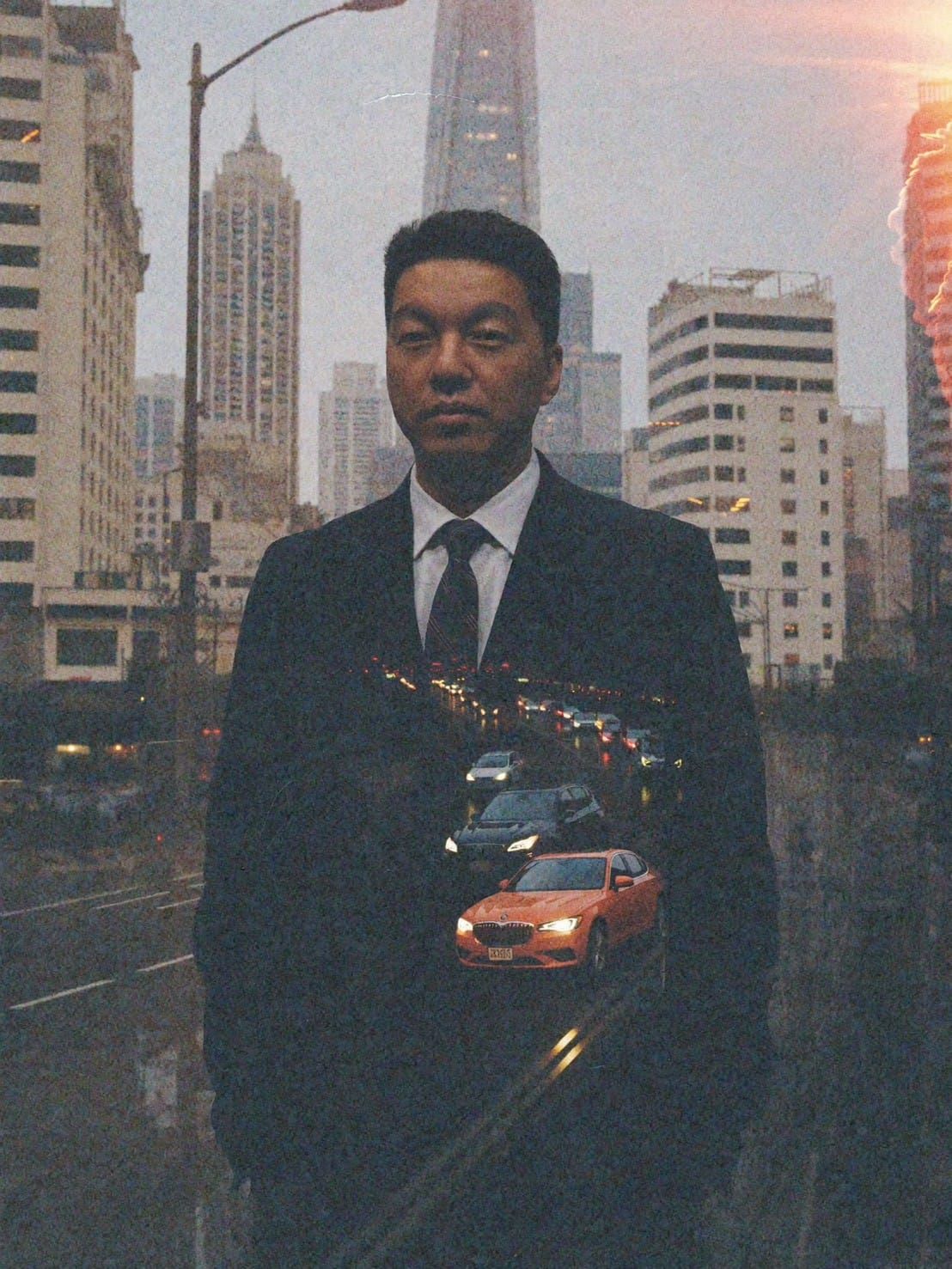
What truly moves you in some places is not how advanced they are, nor how prosperous, but a certain quality that is hard to put into a few numbers. The Czech Republic is such a place for me. When you walk into the cities of that country — the streets, the architecture, the squares, the cafés, the way people speak, the rhythm of how they do things — you slowly feel that there is a very deep foundation here. It is not touristy romance, nor a photo-op sense of Europe, but a sense of order and a sense of time that have truly sunk into life. The rhythm of some places is pushed out by pressure; the rhythm of others grows naturally out of civilization. Both rhythms may look steady from the outside, but inside they are entirely different. The former is tight: afraid of falling behind, afraid of making mistakes, afraid of losing, afraid of not being good enough, and so it constantly pushes itself to be faster, more precise, more driven. The latter is not so: it is more like a composure that knows where it comes from and knows it doesn’t need to keep proving anything to the world. What I felt in the Czech Republic was the latter, and this is why in this piece I want to discuss not only the Czech Republic but where truly advanced rhythm comes from, and why, in the AI era, this kind of rhythm is becoming more and more valuable.
1. What I Felt While Doing Business in the Czech Republic Was Not Only an Ancient City but a Logic of Living
Many people’s first impression of the Czech Republic may stay at old towns, castles, cobblestone streets, churches, music, beer, or that classical yet slightly melancholic beauty of central Europe. All of these are real, but if you walk in not as a tourist but with work, cooperation, exchange or negotiation in mind, you slowly feel another layer,
namely: this place not only “looks historic”; even the way things are done has a feeling of having been polished by time. You will find that often they are not failing to work, nor undervaluing efficiency, but they don’t push things forward in an anxious, forceful, frantic way. They seem to know that everything has the place where it should land: talk when it’s time to talk, wait when it’s time to wait, be meticulous where meticulousness is due, hold back where holding back is due. This feeling is especially noticeable if you have long lived in Asia’s high-pressure, high-speed, highly competitive business environment, because we are so used to a very tight way of working, so used to “fast” itself standing for value, so used to proving we are working through density, speed and being on call at all times. But walking into a place with depth like the Czech Republic, you suddenly realize: a mature civilization doesn’t necessarily need to live in such a rush. It can be steady. Steady does not mean slow. Steady is the ability to know what is important and what is not, to know when to act and when there is no need to move rashly. This ability is not learned on the spot; it usually comes from a logic of living accumulated over a long time in a place.
2. What Eight Hundred Years of Civilization Leave Behind Are Rhythm, Aesthetics and Order
Real civilization has never been just the years in a history textbook. What real civilization leaves is not only buildings, artworks, city walls or royal stories; at a deeper level it leaves people’s feeling about the world — how they feel time, how they feel order, how they feel proportion, how they feel beauty, how they feel their place in the world. These are the hardest things to replicate. What struck me most about the Czech Republic is not that it “has history” but that its sense of history has not stopped at the surface; it is still alive in many details — alive in the scale of the city, alive in the breathing of space, alive in a way of speaking that doesn’t need to keep stacking up performance, alive in a culture that is in no hurry to cover blank space with noise. So I often wonder why people in some places don’t look like they’re striving desperately and yet always have a steadier base. The answer is probably this: because they are not living only inside the anxiety of the present generation. They live on a longer timeline. When a civilization has once had aristocracy, court, art, philosophy, religion, institutions, war and reconstruction, it leaves certain invisible traces in its bones. Those traces don’t necessarily turn everyone into a true aristocrat, but they let a whole society keep a sensitivity to rhythm, aesthetics and order. This sensitivity is precious, because it lets people know that life is not only survival, efficiency is not only speed and ability is not only output. How a person walks, speaks, eats, looks at things and handles fast and slow is in fact revealing his inner structure. This is also why I say what eight hundred years of civilization leave behind is not only stories but rhythm.
3. So-Called Aristocratic Bearing Is Not a Title but Not Being in a Hurry to Prove Yourself
When many people hear the words “aristocratic bearing,” they immediately think of class, bloodline, titles, clothing, etiquette and objects. These of course are related, but the aristocratic bearing I really want to talk about is not these; I want to talk about a deeper state: not being in a hurry to prove yourself. Truly grounded people are usually not in much of a hurry — not because they are lazy, not because they lack ambition, but because they don’t need to confirm their existence to the world through outward action every second. Such a person doesn’t necessarily talk the most, react the fastest or have the biggest movements, but you feel something undisturbed about him. This undisturbed quality is not only cultivation and not only temperament; it often comes from an inner sense of position. He knows where he is, knows what deserves a response and what is not worth reacting to, knows what is truly important and what is only passing noise, knows he does not define his value through every performance, and so he is not so easily pushed along by the outside world. This is how I understand a modern version of aristocratic bearing: not looking down from above, not thinking oneself extraordinary, not despising others, but a very deep stability: not scrambling, not chaotic, not floating, not rushing to prove. This feeling is rare in many anxiety-driven societies, because anxiety-driven societies typically cultivate the opposite kind of person: wanting very much to be seen, afraid of falling behind, afraid others will think them not good enough, afraid of blank space, afraid of pauses, afraid that once they stop moving the world will eliminate them. This way of living can of course produce results, but the cost is usually very high. So what the Czech Republic truly let me feel was not only the “European flavor” but a kind of civilizational afterglow still lingering among the people, in the cities, in daily life: reminding you that a person does not have to be driven forever by anxiety.
4. Many People Mistake Speed for Value and Busyness for Ability
This is especially serious in today’s world. Our era easily equates fast with good: replying fast, doing fast, following fast, switching fast, reacting fast, updating fast. After a long time many people haven’t even thought to ask: am I being efficient or just agitated? Speed itself is not a problem; the AI era will even require certain things to be faster. But speed is not value itself; it is only a tool. If a person has no direction, speed only makes him go off course faster; if a person has no rhythm, speed only wears him out faster; if a person has no inner stability, speed only unbalances him faster. Busyness is the same: many people are very busy but not necessarily strong. Many have many schedules, messages, meetings and outputs, but look closely and they are always being chased by things. This kind of busyness is often not ability but evidence of having lost control. Real ability should be selective: knowing what should be fast and what need not be; knowing what is worth being busy about and what is ineffective busyness; knowing what is worth investing your life in and what only chops your energy into pieces. But the problem for most people today is not lack of effort but mistaking speed for value and busyness for ability. In the end the whole life vibrates at high frequency without truly growing depth. This is also why in places like the Czech Republic I am instead reminded: that sense of civilization quietly tells you that some things cannot be rushed, some judgments need to settle, some sense of proportion must be nurtured by time, and some refinement is not about more but about just right. This reminder is especially critical for the AI era, because in the future we will not lack speed; we will increasingly lack people who know “when there is no need to be fast.”
5. What the AI Era Fears Most Is Not Slowness but Chaos
Today many people, hearing the word “rhythm,” assume it is about slow living. It isn’t. I am not promoting a romantic kind of slowness, nor negating efficiency, nor telling everyone to leave business, competition and the technological world. What I really want to say is: what the AI era fears most is not slowness but chaos, because AI itself is an accelerator: it accelerates writing, analysis, decisions, organization and output. If you already have order, direction and judgment, that is good, and it will add wings to a tiger; but if you were already chaotic, AI will only make you more so. If you were anxious, you will now be more anxious; if you were distracted, you will now be more distracted; if you always wanted to grab every opportunity, now every tool makes you feel you can’t miss out. What happens in the end? Not that you become stronger, but that you are dragged into higher-frequency internal friction by endlessly amplified outside stimuli. So I keep saying that what matters most in the future is not only whether you can use AI but whether you have an inner rhythm stable enough to take on the acceleration AI brings. What the Czech civilizational afterglow reminds me of is: a truly mature system is not afraid of speed, but it must have steadiness first. You can be very efficient, very international, very modern, very technological and very good at doing things; but if you lack a stable axis inside, all acceleration in the end is only a refined version of chaos. So to me, a sense of rhythm is not just aesthetics; it is a capacity for governance — governance of life and of the enterprise — the ability to keep order in a system amid high speed.
6. Only People with Rhythm Can Truly Output over the Long Term
Sprints rely on bursts; long-distance running relies on rhythm. This holds completely in business, in the AI era and in the management of a person’s life. Many people today seem to output fiercely: for a period they have lots of content, lots of cases, lots of opportunities, lots of exposure. But before long they begin to feel fatigue, lose focus, become emotional, see quality fall, even get worn out from the inside. The problem is usually not insufficient ability but lack of rhythm. People with rhythm are not necessarily vigorous every day, but they are usually steadier: they know when to charge and when to pull back, what to press hard on and what to let go of, that they don’t need to fight every battle or answer every voice. Such people may not be the most dazzling, but they can often output the longest. This is why I increasingly value a “sense of rhythm”: it is in fact an indicator of whether a person can carry the weight of life over the long term. If you have only drive and no rhythm, you may be strong for a while and then collapse; if you have only ambition and no rhythm, the more opportunities, the more chaotic you become; if you have only tools and no rhythm, the stronger AI gets, the more you are dragged along. Truly advanced people keep their inner beat even in expansion; it’s not that they don’t do big things — quite the opposite, they can do big things because they have rhythm. So from this angle, what the Czech Republic makes me think of is not nostalgia but long-termism; not slowness but the ability to keep going for a long time; not classicism but maturity.
7. A Reminder for Taiwanese Society: A Sense of Civilization Will in the End Become Competitiveness Too
Taiwan has many strengths: flexibility, agility, high efficiency, quick reaction, strong execution, and a talent for producing results under limited conditions. These are real competitive strengths. But if we are to move to the next stage, we probably can’t rely on these alone, because the higher-level the competition becomes in the future, the less it is just about who can charge ahead and the more it is about who has a sense of civilization. What is a sense of civilization? Not pretense, not surface refinement, not learning a few European-style phrases, wearing a few suits or knowing a few taste terms. A real sense of civilization is whether a person, a team, a company, even a society can form a steadier, more accurate, more proportionate way of operating: can you keep depth beyond efficiency, order beyond speed, rhythm beyond competition, beauty and integrity beyond expansion? These things in the end become competitiveness — and very hard-to-replicate competitiveness. AI can replicate many things: data can be called up, content generated, processes automated; but the rhythm, proportion, stability and capacity to bear that come from a sense of civilization are not so easily replicated.
So for Part 5, the sentence I truly want to leave is:
truly advanced rhythm does not come from anxiety but from civilization. And the truly strong of the future are not merely those who run fast but those who, in an increasingly fast world, still keep their own beat. Such people will not be swallowed by speed, such people can take on the truly big games of the AI era, and such people will also deserve to live their lives as a strength not propped up by anxiety.
⸻CEO Yang