
Part 3 | Singapore and Kuala Lumpur: When Western Medicine, Eastern Wellness and Asian Capital Converge
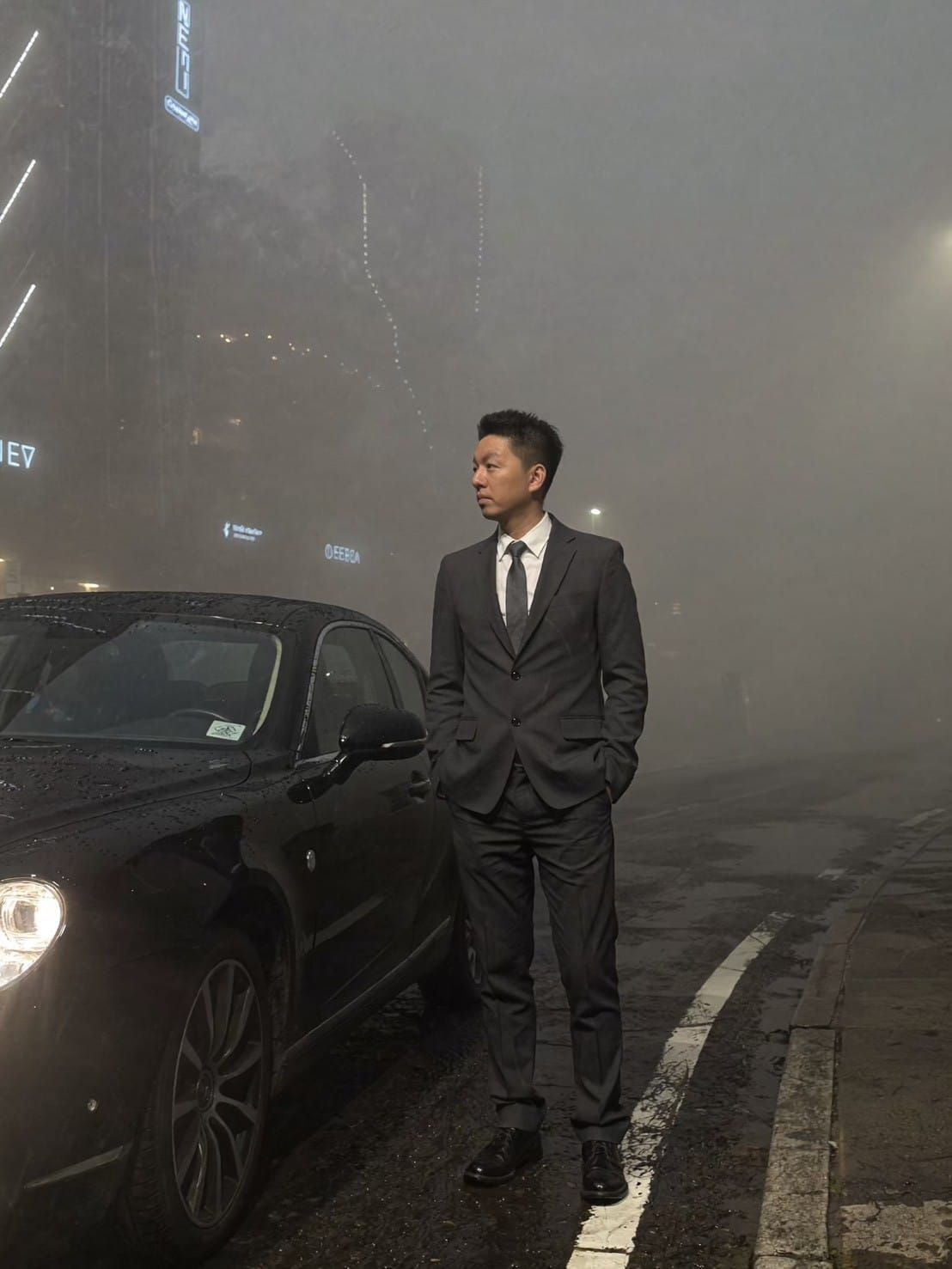
Every time I go to Singapore I have a very strong feeling: this city is not chasing the future; it is itself a picture of the future.
Standing in its financial district, you see the flow of capital; walking into its healthcare system, you see institutionalized precision; coming into contact with its high-net-worth circles, family offices, multinationals and startup ecosystem, you find it is not just wealthy but very good at placing “money” inside a whole, higher-order design of life. When I turn my view to Kuala Lumpur, you see another side: it lacks Singapore’s ultimate refinement, but it has an openness, flexibility and sense of fusion that belong to a Southeast Asian metropolis. You feel these cities are growing a new image of Asian civilization — not merely imitating the West, nor staying in the traditional East, but slowly fusing Western medicine, Asian capital, Eastern wellness, lifestyle aesthetics and international governance into a more complete urban system. This is of great significance for the AI era, because truly advanced competition of the future is not only about whose technology is stronger but about who can integrate technology, health, wealth, rhythm and quality of life into one set of civilizational capabilities. This is also why I have always held that Singapore and Kuala Lumpur are not only business opportunities, not only investment significance, not only geopolitical advantages; they are in fact reminding us that in the future, life can no longer be split into earning money, health, spirit and daily living.
1. Why Does Asian Capital Concentrate in Singapore?
When many people mention Singapore, the first thing that comes to mind is finance, and that’s not wrong: it is indeed one of Asia’s most important capital hubs, with stable institutions, clear tax design, a mature legal framework, high density of international talent, a friendly language environment and extremely efficient government. Together these conditions make it a place where capital naturally likes to stay. But capital flows to a city never only because “money can be made.” What is truly interesting is that high-density capital always ends up flowing toward high-density order, because money chases not only returns but also a sense of security — and a sense of security isn’t shouted into being; it is formed jointly by a whole set of institutions, environment, rhythm and execution. This is what Singapore feels like: it doesn’t attract you with exaggerated emotion; it relies on an overall atmosphere that is steady, precise and clear. The rules are clear, the infrastructure is in place, the city is run crisply, external communication is direct, and the people doing things know what they are doing. Such a city naturally draws high-net-worth people, senior talent and high-end companies, because what they want is never only the possibility of making money but the operating efficiency of their whole lives. A family office doesn’t look only at investment targets; it also looks at healthcare, education, governance, housing quality, transportation, the legal environment and trust costs. Truly mature capital doesn’t only ask “how much can I earn here” but also “can I put part of my life here?” And what is formidable about Singapore is that it makes many people feel: yes, you can.
2. A City’s True Advancement Is Not Only Strong Finance but a Complete Life System
The more I travel internationally the clearer one thing becomes: a city’s true advancement is never only whether it has skyscrapers, banks, funds, IPOs and multinational headquarters. These are all just appearances. What is truly key is whether the city can integrate people’s life systems completely. What does complete include? Whether healthcare is trustworthy; whether the pace of life is sustainable; the cost of distance between work and housing; whether high-pressure people have room to repair; whether a capable person can live here more like a whole person rather than a screw that keeps burning. This is what I felt in Singapore: it is not only financial efficiency; it is more like a model of high-functioning urban civilization — capital flows, but people are also looked after; efficiency is very high, but the system doesn’t entirely spin out of control; the pace is fast, but the whole city doesn’t feel fragmented. This is very different from many places that pursue only development speed and haven’t built quality of life and institutional resilience together. Kuala Lumpur presents another complement: it lacks Singapore’s extremely compressed precision, but it has a looser, softer sense of fusion. It lets you see that new Asian cities need not have only one shape: perhaps in the future not every place will become Singapore, but many places will move in the same direction — combining business, housing, wellness, international mobility, healthcare and education into a more complete life structure. Seen this way, a city is in fact also practicing cultivation: a city that only knows how to make money and not how to let people live can hardly last long, and a civilization that only knows how to expand and not how to repair will in the end backfire on itself.
3. The Precision of Western Medicine and the Rhythms of Eastern Wellness: How They Fuse in the Metropolis
A very clear trend in recent years is that “health” is being redefined. In the past, when people talked about health they thought of seeing a doctor, taking medicine, checkups and treatment — more like remedies after something goes wrong. Now it is not so: more and more high-end cities, high-net-worth groups and senior workers are beginning to see health as a whole proactive management system — not repairing after something breaks but trying not to break down all the way. And this idea is exactly where Western medicine and Eastern wellness begin to converge. Western medicine excels at precision: testing, data, indicators, treatment plans, risk prediction and intervention at the level of organs and systems. It is strong, necessary and very valuable, but precision alone is not enough, because a person is not a report, not an organ, not a single parameter; the human body is in fact a living system jointly affected by emotion, sleep, stress, rhythm, relationships and environment. This is when the perspective of Eastern wellness becomes important. What is Eastern wellness? Not mystery, not folk remedies, not explaining everything as metaphysics; it is more like a wisdom of long-term rhythm management: how do you sleep? How do you eat? How do you breathe? How do you walk? How do you face stress? How do you keep the sympathetic and parasympathetic from long imbalance? How do you keep room for repair within a high-density life? When these two systems begin to integrate, a new health civilization appears: not only treating illness, not only healing, but letting precision medicine and life rhythm begin working together. Singapore is a very good sample: it lets you see that a city of the future not only lets you earn more but also gets you thinking: what kind of body will you use to carry your wealth? What kind of rhythm to carry your efficiency? What kind of heart to carry your success? These questions will only become more important.
4. Health Management, Asset Management and Life Management Will Become More and More Integrated
In the past many people split life into pieces: earning money was one thing, health another, quality of life another, and spiritual repair yet another. In the future it will no longer be split this way, because you will soon find that these things are different facets of the same system. A person with many assets but collapsed sleep, imbalanced emotions and long-accumulated stress may find in the end that his wealth is not a blessing but a burden. A person who is highly efficient but whose nervous system is on high alert for years will find that his efficiency does not bring freedom, only deeper wear. A person with great ability who lives in deep lack and unease may have only an external expansion of achievement without a real inner upgrade. So what is truly formidable in the future is not being extremely strong in a single item but having a high degree of overall integration. This is also why high-end services will become more integrated: healthcare will look not only at disease, asset allocation not only at returns, cities not only at function, and companies not only at KPIs; we will slowly enter a new logic: can you manage your health, attention, rhythm, wealth and long-term quality of life at the same time? This is higher-dimensional competition. You think you are competing in business, but in fact you are competing on whole-system capability; you think you are doing corporate governance, but you are also doing mind-body governance; you think you are managing assets, but you are also managing your own capacity to carry life. If this idea holds, then meditation, mindfulness, sitting and autonomic-nervous-system balance will no longer be personal hobbies; they will become part of future high-end life management, because what will be truly expensive in the future is not only medical resources but a life structure that lets you sustain high-quality output over the long term.
5. How Kuala Lumpur and Singapore Present a New Image of “Modern Asian Civilization”
I have always felt that Asia is growing a new shape: not copying Europe and America, not returning to tradition, but reassembling its own form of civilization under new conditions of pressure, capital and technology. Singapore is like the high-density version of this new civilization: strong institutions, strong capital, strong urban management and strong life organization. It is like a finely tuned machine, but not only a machine, because it is beginning to integrate health, education, mobility and housing. Kuala Lumpur is like another, softer unfolding: not as extreme, but also growing a metropolitan civilization’s power of fusion. You see different cultures, different life logics and different value systems meeting in the same city. It represents not a “second-tier version” but another possibility: future Asian cities need not look identical, but they will move in the same direction — more integrated, more international, with more emphasis on quality of life and systemic coordination. This matters to us because it reminds us that what is truly worth learning from in the future is not just one tool, one financial model or one kind of urban governance, but how to slowly assemble a whole set of seemingly scattered things — healthcare, wealth, rhythm, temperament and technology — into a more organic living environment. That is what I call a sense of civilization. Civilization is not just tall buildings. Civilization is not just GDP. Civilization is also not saying a few things about internationalization. Civilization is whether a place can let people live completely, with quality, with rhythm and with a sense of carrying. Seen this way, Singapore and Kuala Lumpur are not just two cities; they are like two mirrors reflecting the directions Asia may take in the future.
6. Meditation, Mindfulness, Sleep and Autonomic Balance Will Go from Personal Needs to Standard Equipment of High-End Living
Many people still treat meditation, sleep management and autonomic-nervous-system balance as “things to do when I have time,” and this thinking will fall further and further behind, because the truly high-pressure, high-density, high-efficiency life of the future can’t be sustained by willpower alone. If you don’t have a repair system, a method for stabilizing your nervous system and an ability to return to center in high speed, then the higher you go, the greater the risk. This is especially obvious in a city like Singapore, because in such a high-density city, the truly senior people rarely talk only about making money; they also talk about health, daily routines, medicine, stress management, how to maintain clear decision-making and how to ensure that it is not only their assets that are growing but also their whole quality of life upgrading in step. This is the future: meditation, mindfulness, sleep optimization and autonomic balance will increasingly be basic equipment of high-end living — not because people have become more fragile but because everyone has finally understood that without repair there is no long-term competitiveness. That sentence will be truer in the future than today. Today you may still be able to rely on youth to power through, but in a few years what truly decides the gap will not only be who is smarter but who is steadier, who recovers better, who can keep outputting without collapsing. From this angle, sitting is not slowness, mindfulness is not softness and sleep is not a waste of time; they all serve one thing: letting you live yourself into a sustainable, high-quality, high-capacity system.
7. PSF’s View: Future Companies and Individuals Must Manage Technology, Health and Wealth at the Same Time
This is why I increasingly don’t look at AI, health, lifestyle and wealth management separately, because in this era they are in fact one matter. If a company only manages growth and not people’s rhythm, it will easily burn out its team; if an individual only manages efficiency and not mind-body repair, he will easily use himself up; if a person only chases assets without handling lack, stress and inner capacity, then even if he earns, he may not be able to keep it or enjoy it. So from PSF’s perspective, the future we see is not only AI compute centers, not only international cooperation, not only capital integration; at a deeper level, the whole era is beginning to ask us to re-understand “what a complete life system is.” You can’t only know how to do business; you must know how to build your own system. You can’t only talk about efficiency; you must talk about rhythm. You can’t only chase growth; you must also repair. This is not an optional extra; it will become a core capability.
So for Part 3, the sentence I want to leave is: a truly advanced city doesn’t only let money flow faster but lets people live more completely, and the truly strong of the future are not only those who can use technology but those who can integrate technology, health, wealth and temperament into one life capability. Such people will not lose themselves in high speed, such people can take on the truly big opportunities of the AI era, and such people will also deserve the next, more advanced kind of civilized life.
⸻CEO Yang